Sunday, 28 April 2019

Learning from my first Ignite Experience


As I type away, I wonder if I shouldn't have titled this post: "My first Ignite Experience and How I blew it."  But more about that later.


A month or so ago, I got a message from David Carruthers asking me to do an Ignite Talk for #EdCampLdn on April 27, 2019.  That message opened up a can of fear that jumped around in my brain like a mass of angry snakes.  That terror told me one thing.  I needed to do it.  We aren't growing if we aren't stretching ourselves and taking a risk.  I thought to myself: Don't over-think this. Answer before you talk yourself out of it.  So I said I would do it.



My next step was to research Ignite talks: how to write them, how to do them and how to make them meaningful.  A blog post from Scott Berkun was really helpful, as was watching some great Ignite talks on YouTube (there are lots out there).  I also contacted a member of my PLN Noa Daniel, who had just given an Ignite talk of her own for YRDSB's #EdTechCampOnAir.  She suggested I just sit down and write it all out in a stream of consciousness mode and go from there.  She also volunteered to help me develop it by reading my drafts and watching a practise or two via Google Hangout.  (Gotta love your PLN - they are always there for you and willing to help!).


I had a topic in mind.  It was an idea for a blog post that had been floating around in my head, but hadn't quite gotten to the written stage yet.  So, I sat down and wrote it all out.  I wanted to talk about how Special Education isn't just for kids with high needs, it's for all of our students.  How every student has needs we need to reach and how every teacher can help them.  I sat down and let it all just pour out of me.  The result: 15-20 minutes of unorganised zeal about the topic.  Much too long for the 5 minute Ignite parameters.  Over the next two weeks, I edited, revamped and tightened it up. Then I shared the draft with my friend and coach, Noa.  She gave me some really helpful comments and constructive criticism which I used to make my message clearer and more concise.

Then the slides.  In an Ignite you have 5 minutes and 20 slides that auto advance every 15 seconds.  Timing is very important.   So I blocked out the written document and practised speaking it, looking at what I needed on each slide to reinforce that 15 second segment.  I shared the slides with Noa, and with her help, refined those as well.

Then it was time to practise, practise, practise.  I went over it again and again and again.  Every time a little different, every time a little better.  I was practising in my car, in my house, making my husband and my sister listen, and as the date approached, performing it in a Google Hangout with Noa.  I wanted it to be perfect.


Throughout this time period, the other 5 Ignite speakers scheduled that day, kept up a Twitter DM stream encouraging each other.  There were a lot of silly gifs, some advice, but mostly just supporting each other.  Bless these fine ladies.  We were all in the same boat and all a little scared. So a shout out to them for helping me!  Heidi Solway, Dawn Telfer, Kiersten Wrona, Lesley Robertson, and Dr. ParshatiPatel you are the Spice Girls of the Ignite Experience!  It was also liberating to learn that the Astrophysicist among us, was just as nervous about giving her ignite as we were!

Dr. Patel, myself, Lesleym Kiersten, Heidi and Dawn - Ignite Speakers 2019


So the big day arrives.  The big moment arrives.  I'm up first.  I'm glad, because I really didn't want to have to follow the Astrophysicist, even if she was just as nervous as I was.  To add to our load, we were being live streamed through the Sir Arthur Currie PS Twitter feed, and being broadcasted live on www.voiced.ca by Stephen Hurley.  No pressure.

I decide to leave my phone (with my speech content prompts) on the podium, step away from the podium and just go with it.  Besides, there was a hand held mic.  I couldn't hold the mic, talk with my hands and hold my phone.  In hindsight, perhaps, I should have held on the the phone and not talked with my hands.  But hindsight is 20/20.


I begin.  And I'm off and everything is going great.  But then, and I honestly cannot tell you what went wrong or got me to lose my focus, but about halfway in, I lost my train of thought.

What I should have done is taken a breath, looked back at my slide and just carried on.


Instead.  Sheer panic.


Walked back to the podium to grab my Phone.  As I got there, I glanced up at my slides.


Then it came back to me.  I turned around, got right back into it and carried on to the end.

It was only about 5-10 seconds in real time, but it felt like 30 minutes to me.  If only I could have those 5-10 seconds back.  If only, if only....

I sat down.  My fellow igniters gave me some brief encouragement, and then they were up to share their passions.  I listened and watched in awe at their brilliance.  Which was difficult, because I felt like a complete and utter failure.


Coach Noa also sent me a text of support.  In low times, what would we do without our friends?

I gave myself a quick pep talk.  "It's not the end of the world.  You will learn from this.  Pull yourself together because this is just the start of the day and you are one of the organisers of this event.  There is work to be done and much to be shared. "  And I did.

The day went on and it was awesome.  Our numbers were up from last year and the sessions, from what I experienced myself, and from the Twitter stream, were great.  Over lunch (and through the Twitter stream), I got some favourable feedback about my message. When I voiced my distress over messing up, I was reminded that I'm the only one who will remember that and that I should focus on the power of the message, and not my little bobble.  Good advice.  At the end of the day, I was  feeling the adrenaline high of a great day. #EdCampLdn was a success and in our debrief session, my fellow organisers and I were already talking about next year.



But I still have a little sadness in me about what I wanted that Ignite to be.  So, I'm blogging about it, so I can reflect on and to learn from it, and maybe exorcise that little demon voice in my head.  I'm thinking about what my students feel when they take a risk and it doesn't go exactly as planned.  Thanks to this experience, maybe I can help them see that even if the leap they made doesn't land smoothly, they still made the leap.   Success isn't always going to be a perfect 10.0 landing.  Sometimes success is just making the leap.


As always, I welcome your comments below.  Have you done an Ignite?  How did it go?  What is the definition of success? Is it different in every situation?

If you want to see the mess I made of my Ignite here is the link to the Twitter live stream.
And I screen-casted one of my final run-through sessions.  So if you want to see how I hoped it would go, I've embedded it here:


Saturday, 13 April 2019

Canada Beats: Learning about Canada through music


For the last little while, my class has been learning about Canada, but we haven't been doing all of our learning about our Country in traditional ways.  I wanted my Students to be thinking beyond those facts that they can Google about Capital Cities, population and geographic landmarks.  And I wanted them to look a bit at history, but not by using a textbook or a timeline. They are also music lovers and will ask to turn the radio on, or be allowed to use their headsets to listen to music on their iPads every day.  I wanted to leverage some of that interest.  So, we've been using Canadian song writers and performers to look at our Country.


I had been talking to Noa Daniel about her BOB (Building Outside the Blocks) activity called Harmony Through History Beats, where she has students taking a song and deconstructing it to find the history within it.  I wondered if it was something I could use as part of our unit on Canada and give it a Canadian theme.  Noa was very supportive of my amending her idea, and even helped me find some songs and songwriters to add to a shared Google Doc to give my students a place to start.  And so, Canada Beats was born.

I work with students with some fairly high needs, so I knew I would need to help scaffold this project for them.  The shared Google Doc was a place they could find a list of songs that had a Canadian theme or historical background.  They didn't have to pick one of these songs - I was very open to a song or performer they might choose, as long as it had some ties to Canadian history, identity or geography.

Next we decided as a class what our Google Slide Shows needed to have in them and created a template to help everyone understand what information we would need to research.  They were welcome to include more than this, but these were sort of the starting points.  I told them I would create one as well and share it with them and be our first presenter.  Mine was a Stompin' Tom classic.  I gave them some class time to work on it, but many of them used time at home to work on it as well.  One of my students liked the activity so much, she finished hers in record time and decided to do a second one as well.


The hardest part for them was deciding on a song.  Many of the songs they had never heard before because they were released before they were born (some of them even before I was born).  Some of them wanted a more modern song, and spent a good deal of time looking for one.  YouTube got a bit of a workout those first few days.  Some had to do additional research to find out more about a specific historical event, or places mentioned in a song.  With a bit of help from each other, the E.A.s and myself, this was accomplished.

While apps like Vokki and Tellagami, or iMovie were options for presenting, they all decided they wanted to present in a more traditional fashion - just them and their slide show.  All good.  With just one presentation left this week, I have to say, it was a successful activity for them.  The slide shows were good (link to them here), but their presentations really blew me away.  Normally very shy, they really came out of their shells and shared why they picked a song, what they learned from it and even gave additional details about the historical event, place or the band that they learned as part of the research process.

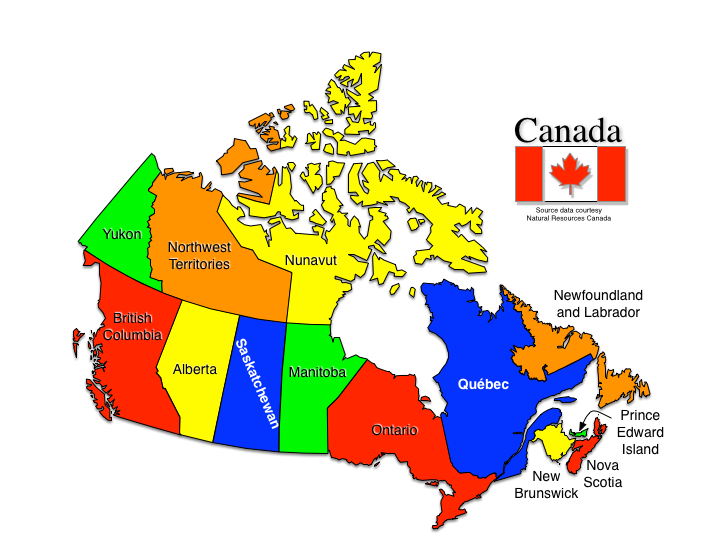
Can they instantly tell me what the capital of New Brunswick is?  Probably not.  Luckily, we have Google for that. (By the way, it's Fredericton - a gorgeous city on the St. John river.)


As always, I welcome your questions or comments below.  Do you think I should be drilling and grilling the provincial capitals?  Is a deeper understanding of some historical events better than a general understanding of a longer historical timeline? Is using music this way problematic?

Saturday, 9 February 2019

50th Episode - I Wish I Knew EDU learning


Bitmoji Image
On Monday, my 50th episode of the I Wish I Knew EDU podcast goes live.  I wanted to celebrate this milestone with a special episode. The format of the show is generally learning about the great things my guests are involved with and then I ask them about some of those "I Wish I Knew" moments in their career.  For the 50th Episode I decided to turn the tables and I asked first year teacher and veteran podcaster, Sarah Anne Lalonde, to take the mic and ask me some of those same questions.  It's a fun episode and I hope you will give it a listen at www.voiced.ca once it drops on Monday Feb. 11/19.  My profound thanks to Sarah for being a part of the episode and for so expertly taking the reins.


My first episode was broadcast on www.voiced.ca February 5th, 2018. So - I've also hit my 1st Podcast-aversary.  A year and 50 episodes into my podcasting journey seems like a good time to reflect on some of my learning. 

Bitmoji Image


The ask is the hardest part.
Deciding to do a podcast, to make that leap and try something new is always challenging.  I'll admit to having some butterflies in my stomach as I got my head around what my format would be and the logistics of getting started.  When the time came to ask a guest to join me it was like a plague of locusts had taken up residence in my gut.  My first episode guest, TVDSB administrator, Heather Jakobi, was so great about just making the leap with me.  When I listen to this episode now, I cringe at my tech errors and I can hear my own nervousness come through, but the sharing and learning is just as great in that recording as in my most recent one.  "The ask" continues to be the toughest aspect of podcasting for me.  Those locusts are still jumping around as I hit send on a request. Why would these intelligent, busy, and amazing Educators want to give up their time to talk to me?  And let me record it.  And then let me broadcast it.  I'm still not sure why they do, but I am so grateful to them for saying yes.  I've had a few turn me down, most often because they are uncomfortable with the medium, but so many more have been quick to respond and jump in.  And I love the guests who have told me "I've never done this before, but it sounds fun - let's do it."  To all of my first 50 guests, my heartfelt thanks for joining me on the journey.


Being organised is helpful
I've tried to release one episode a week.  To do that, work full time and still spend time with my family can get a bit frantic.  Folks who know me will likely agree when I say I'm pretty organised.  This has helped.  When I know things are going to be hectic, like September and June, I record a few episodes in advance and then hold back releasing them in those hectic times.  It's certainly a lot easier to record a few extra episodes in August (and easier to book times to record with guests) when I'm not working every day.  Having a PLN that is always willing to help is a great asset too.  I've had times when a guest has had to cancel or reschedule and my PLN has always been great about responding to a request for a guest with very little notice.  Those have been some of the best and most enjoyable episodes to do.  It's like chatting with a friend.

There are going to be technology issues - Just breathe!
Yep, things are going to go wrong.  And they did.  They continue to do so.  Don't panic.  Just breathe.. and if you can't figure it out yourself, ask for help!  Stephen Hurley (the godfather of voicEdRadio) was and continues to be my best resource for tech issues.  Mind you, he did give me the push to get into this.   I think the first time I experienced audio drift I started to hyperventilate.  Then there was the time I thought I lost the feed from my guest in Australia.  Imagine my horror!  This guest, across the world, has just spent an hour recording with me - across busy schedules and a pile of time zones, and I've lost the audio!  No matter what the problem, Stephen was very patient and helped fix my tech issues while I was learning how to fix them myself.   In times of trouble, I've reached out to other podcasters for help and they have never let me down.  Noa Daniel, your Google Hangout with me to show me a few Garage Band tricks made a profound impact on my editing skills!  So many people I have never even met before, have answered my questions.  Those of you who've helped me over this first year... a thousand times, Thank you!

Can I keep up the pace?
When I started last February, I set myself a goal of one Episode a week.  If you count the live episodes, which I didn't include in my tally, I'm over 50 for the year.  So, goal met.  Can I keep up the pace going forward?  I've had discussions with guests and other podcasters about the work that goes into a 30 minute to an hour podcast.  There's the time spent asking and connecting with guests.  I always like to do a little research.  My episodes last about 30-45 minutes or longer, so there is that recording time.  As I just mentioned, something often goes wrong and the episode needs some editing.  I don't do a lot of post production work and I try only to edit for tech issues.  I want the authentic voice of my guest to be heard, and I don't want to edit that voice out because of a time issue. Once the issue drops, I promote it via Social Media.  My guests have given so generously of their time, I feel I owe it to them to promote the Episode and get their voice heard.  So yes, podcasting has been a fairly large time commitment. It has certainly reduced the amount of blogging I am able to do.  It's also a heck of a lot more interesting and fun than housework! At this point, I'd like to try to keep close to the one a week goal.  But, I may be a bit easier on myself than I was in the first year.


The www.voiced.ca Community
Being a part of this community of EDU-podcasters has been - I don't even know how to put it into words - Supercalifragilisticexpealidoucius?   The support, the sharing, the live broadcasts, guesting on each others shows, the goofy gifs and the 'all in good fun' teasing on Twitter have been a unexpected but wonderful gift. These are great Educators and great people.  I'm honoured to be amongst them.

I'm listening...
In the 50th Episode, Sarah and I talk about our listening skills.  I think that's one of the intangible benefits of podcasting.  I'm a much better listener than I was a year ago and not just when I'm podcasting.  As the year has progressed, I find myself really listening deeply to what my guests are saying.  I'm not so worried about the next question, or getting to a certain topic before the time is up.  I'm really processing what they are saying and reflecting on it, even after our recording time is up.  I'm finding myself listening better to my Students and Colleagues as well.  And that is a good thing.


From the very impetus of the idea of this podcast, my goal has been to highlight and share the great things Teachers have been doing and learning.  I also wanted to share those things we don't learn in our Teacher Training - but sometimes learn the hard way as we navigate our educational careers.  By sharing these things we all learn and maybe save someone from making some of our own mistakes.  The show is not about me (OK, maybe episode 50 is), it's about all my wonderful guests.  I thank you for joining me as a guest, and I thank everyone who has listened this year.

I think I'll end this post like I end each episode, by saying that I really do hope to be talking to you soon on I Wish I Knew EDU, where we are looking back, and learning forward.


Thursday, 31 January 2019

Snow Day Chaos - the Lament is over!

What a difference two weeks makes.


On January 13th I wrote a blog about how my students were lamenting the lack of Snow Days this year (Check it out at: http://bit.ly/SnowDayLament).  Well, the lamenting is over.  Between the snow accumulation and the squalls and the polar vortex, our buses have not run much. This past week has had enough Snow Days to last us for the rest of the year.

I've noticed lots of Social Media posts from upset parents, especially today, the last (at least I hope it's the last) in a long line of cancellations.  The roads here are mostly clear and it is not snowing, but the cold is nasty (Not Winnipeg nasty, but -36 with the windchill nasty).
The decision about bus cancellations does not have anything to do with the school board or teachers.  It's the consortium that runs all the buses that service our schools.  I understand parent's frustration with the disruption, but I also understand that the bus companies do not want to take on the legal risk that an accident, or a child getting frostbite (or worse) waiting for a bus, opens them up to.

It's frustrating for us too.  This is exam week.  Exam schedules have been cancelled, adjusted and  changed repeatedly.  We have been able to get 3/4 written, but will have to finish the last one next week.  Teachers changing schools, or retiring or going on secondments or sabbaticals with exams unwritten are also in a bit of a conundrum - how will they get that exam written, marked and marks submitted, when today is their last day of work?

My students don't write exams, but these snow days are disruptive for them as well.  I work with students with high needs.  These students need a high level of structure and routine every day.  So, when the buses are cancelled, some stay home, but some are driven to school.  I try to run as normal a day as I can, but....

We were supposed to go bowling on Monday.  We've rescheduled it repeatedly and today we finally had to give up on this trip.  Mother Nature just does not want us to go bowling right now.  This was upsetting for a lot of the kids in the program.  Some who were at school wanted us to continue with life as scheduled and demanded to go anyways (impossible with no bus).  A parent called in to let us know her child, who had stayed home, was inconsolable because he thought we would go without him and he could not be persuaded otherwise. Yesterday, one of my students had an emotional meltdown.  She was sobbing and wailing.  "Where are the other kids?"  We had a few stragglers from other classes in our room.  "Who are these kids?"  And the one that broke my heart when I heard it, "When are we going to get back to normal?"

It's frustrating for everyone. (OK, a few of my students are loving the extra days off - but it's going to be tough for them to get back into routine again once we "restart.")  As hardy Canadians and flexible educators,  we will do what we always do, and make the best of it.

In the meantime, I have a message for Mother Nature.  But I can't print it here.  I'm sure she knows.


Frustrated or loving the snow days?  Leave me a message in the comment section below.

Sunday, 13 January 2019

Snow Day Dreaming

This week, my class was lamenting the lack of Snow Days this year.  This may be something that many City schools don't have much experience with.  But for any kid that rides a school bus (and that's most of my class), the dream of a Snow Day starts in November and doesn't die until late April. We often have a few each year. This school year, there hasn't been one yet.


Early in the week there was a forecast for Snow Squalls in our region, and that got the Snow Day talk fired up.  I reminded them of my theory about Snow Days.  If you talk about them before they happen, you've jinxed it.  You cannot talk about it and you should avoid thinking about the possibility of one.  For a Snow Day to occur, there has to be the right mix of weather conditions, happening at just the right timing (so the roads can't be cleared before the bus routes begin), with the important element of no expectation of it.  If you are dreaming of a Snow Day, you have to keep that dream as a silent little kernel of hope in the back of your mind.  Say the words, "Snow Day" and you can pretty much guarantee you will be at school the next day.  They said the words.  Hence, no Snow Day this week.


I got a little nostalgic talking about this with them.  Or maybe I'm just reading too many of Doug Peterson's "Whatever happended to.." blog posts.  As an adult, Snow Days don't have the same excitement for me as they did when I was a kid.  In my 24 years in the classroom, they have only closed the school twice.  So, for adult me, a Snow Day means that I will be bundling up in my heavy coat and snowmobile boots for the miserable drive into school on hazardous county roads.  I've had days where my travel time doubles or triples thanks to Old Man Winter.  That white knuckled drive is not fun.  At school, I always have a few students who make it in, so we can't really run a regular day.  Generally those intrepid Students and I use the day to catch up on work, get some good one on one consultation time or work on our Passion Projects with lots of help available.  It's a good day for the students that attend, but it's not the same without our whole tribe there.


I grew up on a dirt road in rural Elgin County.  I remember many Snow Days.  There were so many days where the buses didn't run.  I seem to remember being sent home early on more than one occasion.  There was even a day where we got in the school at the opening bell and our teacher told us not to take our winter gear off, because the buses were on their way to come to take us home.  Once when I was really young, there was a terrible blizzard ('77 or '78 - maybe both) that shut things down for at least a week.

Picture from www.theweathernetwork.com
I remember one nearby school had to call the army out in their caterpillar track vehicles to get students home safely in the storm.  Lots of folks had no hydro for an extended period.  Dad had a generator, so we were still toasty warm.  But, I do remember he had to go to town on the snowmobile to get milk and essential groceries.  The snow piles on the side of our road were legendary.  They seemed to be trying to cover the hydro poles.  One year, we could literally step off the roof of the garage onto a snow drift.

Picture from www.theweathernetwork.com
As a kid, Snow Days were heavenly.  We'd hear Bill Brady give the bus cancellation notice on CFPL AM radio and we would cheer! We could go back to bed.  We could sleep late and then get up and watch TV (not that there was much on for us on daytime TV back then.  Maybe Mr. Dress-Up or the Friendly Giant before lunch on CBC.  In a storm we only got 3 channels - CBC, TVO and maybe CTV). I always liked to read whatever book I was engrossed in at the time or play board games or barbies with my sisters all day.  You could watch out the window and mentally estimate or exaggerate the height of the snow accumulation.  When it was really blowing, it was a thrill to notice if the snow had obliterated the ability to see the mailbox at the end of our lane way.  If the storm died down, you could go outside for a bit and build forts in the snow drifts.  There was always hot chocolate with extra marshmallows for us on a Snow Day.  It was like a holiday that you hadn't planned on.  A gift in the depth of winter.


Nowadays, we don't seem to have as many of them.  Maybe it's global warming, or weather cycles or better snow removal equipment or more snow efficient vehicles with 4 Wheel Drive.  Possibly, it's all of these things.  But, I still remember the excitement that the possibility of a Snow Day brings.  So keep dreaming of those Snow Days, kids.  April is still a long way off.


Does your school experience a lot of Snow Days?   What memories do you have of them from your childhood, or even recently.  What do you do as a teacher when the buses don't run and you only have a few students in your class for the day?  As always, I welcome your comments below.

Wednesday, 2 January 2019

There Are No Rules in Blogging

What makes a good blog post?  I'm not sure I have the answer to this one.

I was podcasting with Sean Gaillard recently and we talked a bit about this.  I asked him what made him hit publish and were there blogs he started but then abandoned? He said once he started a post, he generally worked at it and hit publish, rarely abandoning an idea.  He then turned the question back on me and asked what my response to the same question would be.  I decided I needed to reflect more on this, as I have abandoned posts I've started before.  He challenged me to blog about that.  Well, Sean, here is what I've come up with...


If you do a search for writing a good post, there is plenty of advice out there.  Most of these Blog-sages" look something like this.   They all talk about having a catchy title, tailoring your post to a specific audience, adding in visuals, keep the post short and sweet and end with a call to action.  I must admit, until today, I haven't really considered this.  I like a catchy title, but I don't always come up with one.  I tend to keep my topics centered around education, but I can meander too.  I often ask a few questions at the end, but more to encourage some feedback, than a call to action.

If I think about blogs that I enjoy reading, I don't think they follow all of these rules or sometimes any of them.  They may be about teaching, but often they are not.  Sometimes I interpret them through my educator's lens, but sometimes they are just fun.  I love Doug Peterson's weekly post "Whatever happened to" - it often brings back memories of my childhood or forgotten technology.   Some blogs I enjoy are long, some are just a paragraph.  Debbie Donksy's  blog is always one that challenges me to think deeper or in a new direction about something, but they are generally much longer than one paragraph.  David Carruthers  has a great blog that generally is short and to the point - but so powerful.  Heidi Solway has a personal blog that always makes me laugh.  And Sean Gaillard's posts almost always bring up a Beatles reference that make me start to sing along.


I guess I follow the "there are no rules in blogging" maxim, whether it's one I'm reading, or one I'm writing.

So, what prompts me to hit post?  Hard to say.  Sometimes I am driving home from work and reflecting on something that's gone well, something that's gone horribly wrong or just something I'm thinking about.  Let me tell you...I've written some pretty amazing posts in my head on that drive home.  Then I sit down at the computer and it all just spills out of me like a tap has been turned on.  Or, I sit down at the computer and... nothing.  The idea that formed on the drive home just doesn't work when I try to put it to paper.  Maybe it's because I've had too much time to think about it, and talked myself out of it.  Maybe the fire I felt on the drive home has been extinguished by the time I get home, or I get sidetracked by some other chore or some other idea.  Perhaps that is a post that just wasn't meant to be.  I still save the false starts.  Maybe they are an idea that needs more time to become fully formed.  Eventually, I come back to them with a clearer idea of what I'm trying to share and finish the post.  Maybe I don't go back to that original idea at all and go on to something new.

A while back, I saw a tweet that said "podcasting is the new blogging."  For me this is not the case.  At least with my I Wish I Knew EDU podcast it isn't.  The podcast is a chance for me to talk to other Educators, get them to share the great things they are doing and share some of the wisdom that they've gained in the classroom with new and experienced Teachers.  It's not about me.  I may be directing the questions and reflecting on what they share, but the podcast is about them.  Certainly, talking to these folks has lead me to blog (like right now), but it really isn't the same as blogging.


Blogging comes from inside my head and heart.  It is less in the moment and more reflective.  I don't spend a lot of time writing it, but I may spend a bit of time thinking about it before I actively start typing it out.  I've spent a few weeks thinking about this post.  But, I'm writing it down in one sitting and will likely hit post once I've read it over once and checked it for spelling mistakes (undoubtedly missing a few).  Once I've got the idea out of me and digitized, I need to set it free by hitting publish.

I guess if I'm going to sum up my definition of a good blog post, it would not be about the rules.  A good blog post, whoever writes it, comes from inside the writer.  It's real.  It's passionate.  It gets me thinking, gives me something new to try in the classroom, makes me laugh or it chokes me up a bit.

My blog posts aren't going to always connect with every reader. That's cool.  Maybe this one hasn't connected with you - although if you've read this far... 😉


Your thoughts on what makes you hit publish, or what makes a good blog post?  Drop them in the comment box below.


Saturday, 29 December 2018

Fill Your Own Cup With Gratitude

November is tough.  The excitement of September's fresh start has passed.   You've worked hard to build those relationships in your classroom, but the honeymoon period is over.   You've been doing great things in the classroom, and you are planning even more.  There's meetings, Professional Development, extra curriculars, Parent nights....You've got a hundred balls in the air and you are trying to keep them there.  There are no holidays in the month to give you time to catch your thoughts.  The holiday break is approaching, but it still seems a long way off....and there is so much to do before then at school and at home.  You start to feel like Sisyphus trying to push that bolder up the hill.

That's me pretty much every November.  Yep, 24 years in, and November still drags my spirit down.  This year was no exception, except for the fact that I seemed to hit a low that last week of the month that I had never before quite felt, or at least not in a very long time.  There were a lot of factors that contributed to my perfect storm of self doubt and unhappiness that I don't need to go into here.  What's important is that for the first time in a long time, my cup was empty and I was really struggling to just get a drop of anything in it.

I drove home one grey November day thinking, "I don't think I heard one positive thing today."  On reflection, I probably did, I just wasn't in the state of mind to really hear it.  The negative was drowning out every other thing in my head.  Some of those voices were undoubtably my own internal Negative Nancy, whom I generally keep locked up and refuse to listen to.  But, November had unlocked her cage and she was out and she was incredibly loud.

This was not me.  This would not do.  It was time to do some self care and get that b#*%!@ back in her cage.  I took some "me time" to do a few things that bring me peace.  I reached out to a Marigold (If my Marigold reference is foreign to you - check out this post by Jennifer Gonzalez) and bless her, my marigold gave me a positive message I could hold on to through this storm.  There was a trickle getting back into my cup.

Then Joy Kirr shared a video about gratitude on Twitter.  (Source: YouTube https://youtu.be/oHv6vTKD6lg)

And VoicEd Radio started their #voicEdGratitude challenge for December.

I wondered if, maybe, a daily intentional gratitude moment would start to quiet the negative voices.

Each day, Derek Rhodenizer would post a gratitude challenge for anyone following the hashtag to complete.  Some of them were Twitter based like thanking a member of your PLN by sharing their Twitter handle.  Many of them were not Social Media based, like thanking a non teaching member of your staff.  There was even a more intense gratitude "Secret Santa" activity for participating members of the VoicEd podcasting community.

At first I was hesitant.  Did I really need one more thing on my "to do list" each day?  I gave myself a pep talk.  These were not huge asks.  They might help and they certainly could not hurt.

With each task, I felt my spirit start to lift.  I dove into each new gratitude activity with greater gusto.  My own gratitude experiment was working.  My cup was starting to refill, not with positivity from others, but from doing something intentionally positive for someone else each day. 

That is not to say, that by the last day before break, I was energetic and eager and back to my September level of enthusiasm.  I came home that Friday pretty much ready for a long winter's nap.  But, I wasn't on empty anymore.  My cup was becoming self sustaining, at least at a workable level.  After a week of holidays, family time, "me time" and reflection time, my cup is almost full again.  Come January 7th, I'll be ready.  And I'm really going to try to keep my cup from getting that empty again by filling it with the gratitude I give to others.


As always, I welcome your comments below.  Do you get the November blahs?  How do you refill your cup when it is low?  How do you show gratitude year round?