Wednesday, 4 July 2018

#HockeyMath

The Regular Season

This year my class was a group that without an exception, was obsessed with hockey.  They all had their favourite teams, their treasured players and wore their jersey or team themed t-shirts with pride.  I didn't have to tune into SportsNet or TSN or check the hockey scores on my phone.  I could not get down the hallway before school started without one of my Students coming up to me to let me know how their team had fared the night before.  I'd hear about the goals, the trades, the fights, sometimes they would even ask me to play snippets of the game in our morning class meeting so they could show a great play from the night before.  During playoffs, the pregame show from the Las Vegas Knights was high on the video request list.  Eat your heart out, Don Cherry, these kids bleed hockey!


The Playoffs

You would think that a grizzled and seasoned classroom veteran, such as myself, might have thought of a way to leverage this shared passion a lot sooner.  But, I am sad to admit, it wasn't until just before the playoffs that the red goal light went off in my head, and I came up with #HockeyMath.  The math folks at TVDSB had done a great job in December of the #12DaysofTweetmath, so I decided to try doing our own daily hockey math activities and tweet them out.  It's not a unique hashtag, and it's not the first time someone ever posted hockey math on Twitter.  But that's what I called it, for lack of any corporate sponsorship or sports marketing teams to help me.  Unfortunately, sometimes we got so absorbed in the activity, we forgot to take pictures and tweet them out.  I think we averaged a tweet about once a week during playoffs.  But we had fun with it every day.

We brainstormed around how much math you can find in hockey, and then we started coming up with hockey math problems to solve.  I have a Special Education class, so sometimes they needed a little or a lot of help with this part.  Another resource I accessed to help out was https://hockeymath.wordpress.com/ . This is a great article about various examples of math and science in hockey - and I used it for some ideas to get going.  Some of them were a bit too advanced for my group - but I found ways to break down or simplify the math in a lot of the ideas to use with my crew.

We were looking for patterns on the ice surface.  We looked at the (very simplified) odds of a team making it to the Stanley Cup Finals.  We measured distances on the ice, calculated the area of the rink and the face-off circles.  We calculated the volume of a puck.  We looked at statistics - broke them down into what they mean and why teams use them.  We looked at ticket sales, how to calculate HST on a ticket price and how and why ticket prices grow in value as you get closer to the ice surface.  We looked at the salaries the top and bottom players make and calculated what they make per game.  We became team managers and compared some player stats to see who we would play and who we would bench.  We filled out playoff brackets (for bragging rights only!...OK...maybe the winner did get a chocolate bar) and with each team that was knocked out, we experienced either the thrill of victory or the agony of defeat.  One student ended up with a perfect bracket.  Picked every team right, even the Capitals winning the cup.  Aww Shoot!  I just realised - we could have calculated the odds of being able to do that!

Let me tell you, those kids were so engaged in the math.  My heart gave a little "Whoopie" when I heard one Student say to another, "I hate math, but this is hockey, so it's fun."  And it was fun.  I gotta tell ya, those kids gave it 110%.

The Post Season

With the hockey season over, and the Capitals all wearing their new Stanley Cup rings on the golf courses of the world, I've had some time to reflect on a few things I will do differently next season:

- Start sooner.  I don't think I could sustain it every day all season, but maybe I could cut it back to maybe once a week and run it for a longer period. 
- get others involved.  We were sharing the tweets of some of the things we were doing, but getting some other classrooms involved (board-wide, or worldwide thru Twitter) and maybe creating problems for each other to solve via Google Hangout would be a great way to get at those global competencies and make more connections outside of our building
- get a bit more tech into it.  We were using our iPads to look up info, but mostly used our white boards for calculations.  I'm thinking there has to be a way they could document their learning - collaborative doc, slide show...something.  I'll keep working on that.

If you have any ideas or hockey math to share - please post them in the response section.  I'd love to hear them.  In the meantime, I have a tee time to make.  Isn't that how hockey players are supposed to  prepare for the start of the new season in September?

Blogger's Addendum:
This post was featured on VoicEdRadio's "This Week in Ontario Edublogs" on July 11, 2018 - an Episode I was a Guest on as well.  If you want to check out the discussion between Doug Peterson, Stephen Hurley and myself, check out this link.  We did have some technical difficulties - so I apologize in advance for the sound quality.


#Inquiry Mindset Book Study - C1 post

Image by Rebecca Bathurst-Hunt, InquiryMindset, https://barbarabray.net/wp-content/uploads/2018/02/Screenshot-2018-02-06-11.11.41.png


To get the #InquiryMindset book study going, we've been asked to take a look at this sketchnote by Rebecca Bathurst-Hunt and reflect on which of these characteristics we are feel we are doing well in our classroom.  I think everyone in the study can include passion as something they do well.  It's one thing to read a great book like Inquiry Mindset over the summer (showing a love of learning), but we must be passionate about what we do, if we are doing a book study that has us vlogging on FlipGrid and writing blogs about it...IN THE SUMMER!  So well done, all of us!

As I think about what I do and apply it to this graphic, I feel that my strongest trait is knowing my students.  I teach a High School Congregated Special Education class, working with 10 students aged 14-21 with various Developmental Disabilities.  They are a very diverse group with academic levels ranging from Pre-K to about grade 6.  I'm blessed to have the same great group of kids all day - all year, which is not something many High School Teachers can boast.  I may have them for only one year, or they may be with me for seven years.  The time we spend together means I get to know them and their families quite well.  But, it's not just about time.  As a class, we work hard to build our community and foster a growth mindset - because, and I know you've heard it before, but it is the absolute truth...It is all about relationships.

Without those relationships, students won't feel safe to take a risk or collaborate or share.  Relationships make tough conversations possible.  Without a relationship, there is no trust in me as their teacher, or in each other.  Without relationships, the classroom is not a safe place to ask questions and without questions - there is no wondering, no inquiry.

What are some things I do to foster those incredibly important relationships in my room?
- lots and lots of Tribes activities.  If you have the opportunity to get Tribes training - go for it!
- celebrations - after a tough day, a great breakthrough, finishing a group study, presenting a passion project, or just because it's Wednesday - we pick a song and we dance. 
- starting our day with an informal class meeting/chat to see what's happened, what's coming, where everyone is at
- Passion Projects - if you want to know the things that most excite your students, give them time to explore one of their passions and share it with the class.  We learn so much from each other by sharing these
- #P3 Playlist - the students choose 3 songs that talk about who they are and share them and their reasons for picking them.  The songs are tied to their history, their identity, and a song that just makes them happy when they hear it.  (This activity came from Noa Daniel's Building Outside the Blocks Activities - check out the link to learn more about it).  I cannot tell you how much we learn from each other doing this.
- laughing together.  If we see a funny (but appropriate) YouTube video or a James Cordon or Jimmy Fallon Sketch, we share it.  We take the time to watch it and laugh together.  Maybe this one is a little silly, but starting the day with a laugh does wonders for relationships.  And our class is huge fans of Carpool Kareoke, Broadway Crosswalk and Camp Winnipisake.


There are more, but they are not jumping out of my brain right now, so this is a good place to stop.  I'll never be the perfect Teacher I want to be - but I keep working to improve.  There are many things I'm not proficient at.  But, man oh man, I know my Students.

Friday, 15 June 2018

Commencement: An End or a Beginning?


We've hit the mid-point of June on the calendar.  In a High School that means sports and extra-curriculars are at an end, Field Trips are done, Prom has come and gone, awards banquets abound and we are only a few days away from the beginning of exams.  Classes are reviewing a semester full of work and today we had our year end assembly where we said good-bye to staff who are retiring or moving on to new assignments.  Looming ahead of us is the crowning achievement of the school year, Commencement.  I know that many schools hold their ceremony in October, but ours is always on the last Thursday in June.   Preparations are well underway.  The Commencement Committee is working madly behind the scenes to make the evening memorable. 

Jump forward to the big night: The heat of the gym where we hold the festivities is oppressive.  The Graduates are sweating in their caps and gowns.  The crowd is standing room only as family and friends come to see their Graduate cross the stage and hear the Valedictorian's message of hope for the future.  Everyone is a little tired, perhaps a little cranky from the heat,  but full of excitement, because Commencement is the most important night of the school year.  It's the night where everyone's hard work is celebrated, where students show how they have grown, matured, and earned their way out of our building and on to the next step of their lives, be it the world of work or on to post secondary studies at the institution of higher learning of their choice.  It comes at the end of the month, at the end of the school year and it is the end of their tenure in our building.  It is an ending.  But, it's also a beginning (Cue "The Circle of Life" theme from Disney's The Lion King).


If you look at the Oxford English dictionary definition of the word Commencement, it is "the beginning of something."  For our students, it is the beginning of their adulthood as they move on to jobs, academia, apprenticeships and life after High School.  For staff, it may be on to new roles in the Board, new schools, retirement, or it could be viewed as the beginning of the next class of future graduates who will join us in September.

Right or wrong, I often think of Commencement as my own culminating activity.  The time, and the work, and the investment I've made in my students since their arrival in Grade 9 is about to pay off.  My work with these amazing young people is done and they are on to new adventures.  So it really is both an ending, and a beginning.

Wether your Graduate is commencing from Kindergarten, Elementary School, Middle School, High School or Post Secondary School, a new job or a new role or a new adventure, wether you view this as an ending or a beginning, or just a short breather as they move on to their next step...celebrate it! Take pictures, share a congratulatory hug or handshake, eat some cake, really revel in the moment.  Because you know what?  It really is a big deal.

Congratulations Graduates.
image from


Saturday, 26 May 2018

Racing into June

gif from

The last month and a half of the school year always feels like the last 10 laps at the Daytona 500 to me. No more pit stops.  Petal to the metal.  Running on fumes.  Hoping I can keep the car going at peak performance without getting involved in an accident, or hitting the wall at high speed. Able to see that finish line coming and willing myself to take the checkered flag.

With most of our official Professional Development Days done and the last long weekend past us, we are out of pit stops.  There are no more breaks in our weeks and the weekends are full of events.  There are Retirements to attend, Awards Nights to plan, Prom, not to mention family engagements.  There are so many other things going on at school: like year end field trips, assemblies, and coaching spring sports.  We are starting to work on Report Cards, getting things ready for Commencement, and transitions for new students coming to us in September.  Some of us are dealing with EQAO testing and all the anxiety that standardized testing can bring to our classrooms.  There's Spring shows and year end celebrations and saying goodbye to folks moving on to new challenges.

Oh yeah, and we are still teaching too.  Trying to get all those fabulous learning experiences in before the end of the year.  We can see the end of year finish line tantalizingly just ahead of us.  And we are getting tired.  So very, very tired.

gif from

It's the wild and wacky ending to another school year.  It's the culmination of what we've worked for with our Students.  And, it's the expectation of a rest.

I'm trying to make sure while I'm racing through those straightaways and keeping the corners under control, that I take time to enjoy the ride.  I'm drafting a bit on others, and hoping others will tuck in and do the same with me.  I'm reminding myself how thankful I am that I'm in the race at all and what  a great profession I have chosen to be a part of.  All the while, starting to think about next year and the next big race.

gif from


Fellow drivers, we are almost there.  Hang in there.  Enjoy the ride.

Summer is coming.

gif from


Saturday, 28 April 2018

#edCampLdn Reflections

So...it's over.  

Ed Camp London has come and gone.  I'm feeling like Christmas Day at about 9 pm.  All the excitement is over, the presents are opened, the huge meal it took days to prepare has been devoured, the guests have all gone home and I'm feeling very full (but instead of a full tummy, it's my brain that is experiencing the turkey sweats) and a little sad that it's all over.   Time to chill, review the day, and perhaps squeak in a nap before supper (I told you, my brain is tired!).


If you have never been to an Ed Camp before (like me!), it is a workshop/conference with no set agenda.  As you arrive, you fill out sticky notes of things you would like to learn about, or would be willing to share about.  The organizers then start to build sessions around common themes.  Nobody actually presents.  You gather and discuss these topics.  You share ideas.  Have a question?  Someone in the room may be able to answer it - or may ask you another question.  It's some pretty rich discussion and an amazing environment to learn in.  This may have been my first EdCamp - but it sure won't be my last!


The Day began with some Ignite talks.  That's where the speakers get a set time and a slide show that advances every few seconds automatically, to share a message with the attendees.  Jay Dubois gave his very first Ignite about trying new things - encouraging us to write in pen so we can't change our mind and erase our good intentions.  Jen Giffen spoke about moving away from the game of school and encouraging our Students to create, not imitate.  Melanie Mulcaster talked about the vision behind great makerspaces.  Derek Tangredi and his former student, Valentina, talked about teachers making a difference by the headlines that don't happen, the importance of empathy, and that students don't need Teachers to be perfect, they just need us to care.  David Carruthers reminded us not to tone it down - not to let the naysayers dim our light.  I love watching Ignite talks.  They don't just fire you up for the rest of the day - they leave you with lots to think about going forward.


I was a part of a small but might session on Coding with Derek Tangredi, his former student Valentina, Doug Peterson, Luigi @TeachCodeCreate (sorry Luigi, I forget your last name!), Melanie Mulcaster and a few others and was blown away by some of the new things discussed.  I picked up some new coding sites too - I can't wait to try Codemoji.com with my students!  Doug brought up an important point as well - that coding is not always about training coders - that it is also about the logic, computational skills and type of thinking that Students are doing when they learn to code.  And Luigi - who works for the Boston Celtics by the way - where the heck would I ever meet someone who does what he does and be able to learn some of the amazing applications coding has in the real world, and the way he is able to condense that into some real world applications for students. 


Then I went to the makerspace at Sir Arthur Currie PS (and thanks to Principal Sue Bruyns for hosting this event in her amazing new building!) and played with some Ozobots and Blue Bots.  Luigi and Melanie were there again - and just listening to how they were working out a lesson using several ozobots and applying it to solving big city traffic issues was like watching master coding teachers at work.  And I will also admit - the bots are just fun to play with too.


After lunch I got to spend an hour discussing FlipGrid and Podcasting with a great group of educators, but for me a real highlight was getting to spend the hour just chatting with Jen Giffen about these subjects (I but a lowly apprentice to the great master) - who I am in awe of.  We also migrated into the power of Twitter for learning, ideas and your PLN. 

My last session was on Global Competencies.  I must apologize to my fellow attendies - my cold medication was wearing off and I was going a bit in and out of focus on this one.  But it was great to have a Student with us and sharing her insights on empathy and communication.

Another great thing about being a part of Ed Camp (as Dawn Telfer and I discussed) is that there are really only positive, innovative, on the band wagon, driving the train folks in attendance.  You would be hard pressed to find a safer environment to get your ed-tech or edu-geek on.  Those who would tell you to "dial it down" or "stop making the rest of us look bad" - are not getting up on a Saturday morning for an event like this.  And some folks, like Jen Giffen and Doug Peterson had pretty long drives to get here.  We were all there because we wanted to be.  We all wanted to learn and we all wanted to share.  Pretty amazing.

Really, though, I think the real power of EdCamp is the connections you make and the conversations you have.  I got to meet Derek Tangredi, Cliff Kraeker, Jay Dubois, Peter McAsh, Andrew Forgrave, Sue Bruyns, Jen Artan, and Diana Hughes, IRL (aka in real life) for the first time.  It is always cool to meet the folks you count as part of your PLN, or chat with online.  I even recruited a few of these folks for future "I Wish I Knew EDU" podcasts.  (You know who you are and thanks for taking the leap and saying yes to podcasting with me!  If you are reading this and would like to make that leap - DM me - I'd love to chat with you!).  It's also a great place to chat with folks you don't get to see much, but whose input you value greatly.  I caught up with Doug Peterson, Melanie Mulcaster, Jen Giffen, Dawn Telfer, David Carruthers, and Heidi Solway, to name a few.  I also met a lot fascinating people who I have added to my PLN.

Thanks to the EdCamp London organizers (my apologies if I have missed anyone): Sue Bruyns, David Carruthers, Heidi Solway, Jay Dubois, Dawn Telfer, Diana Hughes.  You put a lot of hours into a fantastic event and I thank you.  If you were there or have been to EdCamp before, please feel free to share some of your reflections in my comments section below.  I'm always interested in what you have to share.  But right now, I'm going to try and sneak that 15 minute cat nap in.  My brain is Full!

Friday, 20 April 2018

Investing in their Passions

This year I dove into Passion Projects with my class.  

Some folks call it Genius Hour.  I prefer Passion Projects.  I get a bit worried that the word genius puts  a lot of pressure on my students to create something that is the "be-all-and-end-all-perfect-project".  That's not what I was asking them for.  I wanted them to pursue something they are passionate about and find a way to show me what they'd learned.  I would be there for advice and help if needed, but mostly this was to be all on them (with a little scaffolding in some places and lots of scaffolding in others).


I'd heard about these Passion Projects through course work, colleagues and Twitter.  I did a bit of reading over the summer on them.  Come September, it was time to make the leap.  And leap we did.  I introduced the idea to them through a fun little PowToon creation.  I told them I was giving them 75 minutes (1 Period) a week on Fridays to work on it.  We did some activities to help them discover their interests and to help them decide what to focus on.  There were interest surveys.  We played some games where they had to complete sentence stems like:  'When I can do whatever I want, I like to..."  They created Popplets.  They discussed ideas with their elbow partners, the two Educational Assistants, and myself.


Then they had to commit to their project and Pitch it to the class.  Things got a bit bogged down here.  They wanted to get into the projects and didn't understand the idea of the pitch, despite lots of examples and interventions.  After a frustrating third Friday of working on these, we had a class discussion, where we collectively voted to toss out the pitch component.  We still needed some way of getting them to commit to and focus on their topic/guiding questions.  Our solution: they would blog or vlog about what their project would be in a minimum of 5 sentences.  Now we were cooking with gas!

Some of them got really involved in their projects.  They were working on them at home, at night and on weekends.  A student working on a Pixton.com Comic Book format on Monster Trucks for her project added all kinds of pictures she took when she went to these events - and lots from the Internet too. One of the girls was doing her project on the St. Thomas Stars hockey team.  She was meeting with the team coaches and players, conducting interviews and even talked her mom into getting her a Chromebook at home, so she wasn't hogging the family desktop to work on her project all the time.  One changed his mind midstream and completely revamped his project.  Two of them needed a lot of support and assistance to create their e-books using the Book Creator App.  One student with a lot of issues at home, and very low attendance, has not been able to produce a lot.  When he's at school, he does what he can.  He might not finish what he started.  And that's okay.

This week, about half of my class finished their Passion Projects.  In the next few weeks, hopefully they all finish, or get to a point where they can present their projects to each other.  It's hard to get parents in for these events, so I will record these and put them in each student's portfolio. You can see their portfolios and finished projects on our Passion Project Website (they were all excited when I asked them if I could share this in my blog.  They are very proud of these projects and the work that went into them).  The completed projects (as of April 20th, 2018) are those of: Deanna, Kalley, Dylan and Connor.

Image from: https://www.success.com/sites/default/files/7_4.jpg


There are no grades in my classroom.  Never really have been.  Everything is guided by the IEP and our report cards have no marks, only feedback and next steps for their individual goals.  (I might be ahead of the curve on the "no grading" trend.)  In their video reflection on the day they finish the project, I've asked them to assess their work skills and their final product by giving themselves a grade of A, B or C.  They will give each other some Peer feedback through FlipGrid.com and I have been giving feedback all through the process, so all that's left after that is to celebrate their success with a party on a Friday in late May.


Will our class be doing Passion Projects again in the fall?   Absolutely!  I will do more reflection on this over the summer and I know I will tweak things a bit, but overall, I think it went really well.  They were highly motivated, engaged and directing their own learning.  A few things I would change?  I need to have more structure for a few of them.  The wide open nature of the product was too much for them and seemed to paralyze them a bit.  When I gave those particular students a framework to go from, they were able to work more independently again.  The pitch portion needs to be scaled down - like I mentioned earlier, a blog or vlog will do in our room.  I thought they would be able to complete these projects within the semester and start a new one for semester 2.  Nope.  It takes time to do these well.  I'm glad I didn't push them to finish quicker, or to cut off their inquiry too soon.  It took almost the entire school year of Friday period 1s to get to where we got.  And that's okay with me, too.

To paraphrase Kid President, and Robert Frost (my apologies to Mr. Frost);
We came to where the road split into two paths and we took the one less travelled.
We wanted to be on the path that leads to awesome.
And we found a whole lotta awesome!

Image from: https://encrypted-tbn0.gstatic.com/images?q=tbn:ANd9GcQMxOIKT6ytecwscZbkRYOyd3_2_3_iZz-m5FwNI4ztisb30lB-xQ

Friday, 6 April 2018

Blogger's Block and the Winter Olympics


Blogger's Note:
I know this post is a little late. Yes, the Olympics were over more than a month ago. I've got a few excuses; like things got busy, I was away for March Break, I was starting my Podcast. Blah ditty, Blah ditty, blah, blah, blah.  If I'm being honest...and what's the point of blogging if you aren't going to be honest with yourself...I had a serious case of Blogger's Block.

Yep, the dreaded ole' 2B.

I tried starting this post, and about four others on various topics, on several occasions.  All crap.  Just a bunch of fragmented words and loosey goosey ideas floating around like a bucket of minnows.

But, I'm back.

I think.

Maybe let me know what you think in the comments, after you've read this.  I thank you in advance for your patience.  Without further ado...here's the real post.

Winter Olympics Fever


This February and into March, our classroom heated up with Olympics Fever.  We cheered our favorites, watched some of the death defying events, shared the thrill of victory and the agony of defeat (most during hockey games).  We also did a lot more than that, as the Olympics became a cross-curricular event of the educational kind.

We were lucky to have one of our Viking Teachers actually at the Olympics.  Math teacher, Mr. Higgs, is the coach of the USA Co-ed Curling Team.  He was sending us photos and updates from the games.  Which, really...was totally cool.  And so great of him to take the time to do.

Before the Opening Ceremonies, we discussed as a class how the Olympics could be a part of our learning over the next few weeks.  The students created a collaborative slide show of our Canadian Medal Winners.  They worked on projects about Canadian athletes.  Each day they updated our Google My Maps of the hometowns of Canadian Medal winners.  They researched the various sports that are a part of the Winter Olympics and what is involved in training for them.  You can see some of their finished work on our classroom website.

We had some great morning discussions.  Each day we updated the Medal Standings and talked not just about how Canada was doing, but looked at them through a math lens.  One day near the end of the Olympics a Student brought up the idea of looking at how the results would have been different if the medals of the athletes from Russia had been included.  That was a great little math exercise.  But it got really interesting when it lead into the topic of cheating - not just at the Olympics, but in general.  They talked about how cheating is cheating if it's in Sports or anything else in life.  Some of them thought cheating at a card game was okay, but only if there was no money involved.  One of them pointed out that Olympic Athletes are not paid for being at the Olympics, so did that make cheating there ok?  It was a really great discussion with lots of give and take.

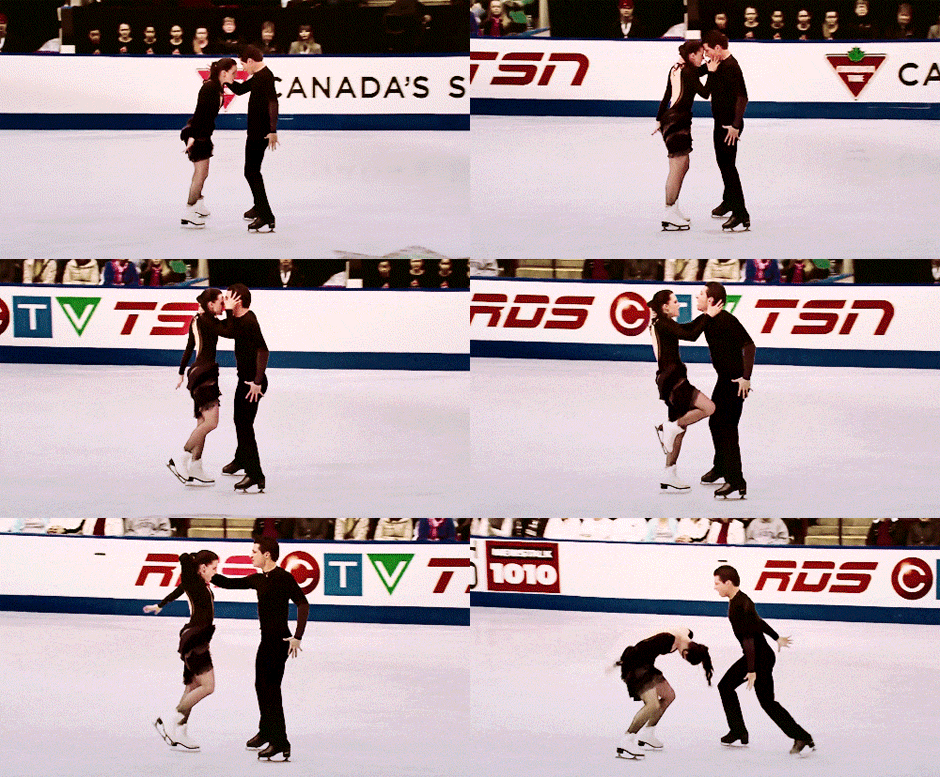
There were some great mini science and physical education/health lessons looking at the different events.  The basic physics that was involved in a ski jump or a triple axel became fascinating.  We didn't always understand the properties behind them, but we did gain a bigger appreciation for what it took to do these things and compete at an International level.  We also talked about why certain athletes might be better suited to certain sports.  The day after Tessa and Scott competed, we talked about the difference in ice dancing and pairs skating - and why in Pairs Skating, the male partner is usually very tall and his partner very tiny, so that they are able to pick the lady up and propel her across the ice in a throw or lift.  But they noticed that in Ice Dancing, the pair was close in height because it looks nice and they don't do the throws that the Pairs do.


They were able to see how all the things we've been learning about Growth Mindset would be really important for athletes and the idea of working towards a personal best being as important for athletes as winning a medal.  I asked them if they thought that this same concept would apply to them in Special Olympics or in their lives in general.  Most of them said they thought it did.  I'll admit to getting a little more heavily involved in pushing this conversation, and I really hope they are able to transfer this to their own ideas about growth mindset and continuous learning and improvement.

It really was just over a month of great learning and inquiry.  They were motivated.  They were excited about coming in each day and sharing what they had watched the night before.  Some of them were working on their projects...AT HOME!  Not because it was homework.  It wasn't.  Because they were just that into it.

There was so much more that we could have done, and maybe we might do the next time the Olympics roll around.  I would have loved to include the ParaOlympics in the Unit - but they were held during March Break, so the timing was off.  The Canadian Olympic School Program site had great activities that tied more directly with Physical Education - we didn't have any gym time this semester,  but I think they would be great to do if we did.  I might have been able to bring in some art and music by tying into the Opening and Closing ceremonies, and looking at the team logos and uniforms.  There is just so much we could do - but at some point, you need to move on to other things, or we would still be doing the Olympics in June.

We were sad to see the Winter Olympics end.  But - 2022 will be here before we know it.  Time is like that.  I'd be interested to hear if others used the Olympics as a thematic approach to curriculum?  What types of things did you do in your classrooms?